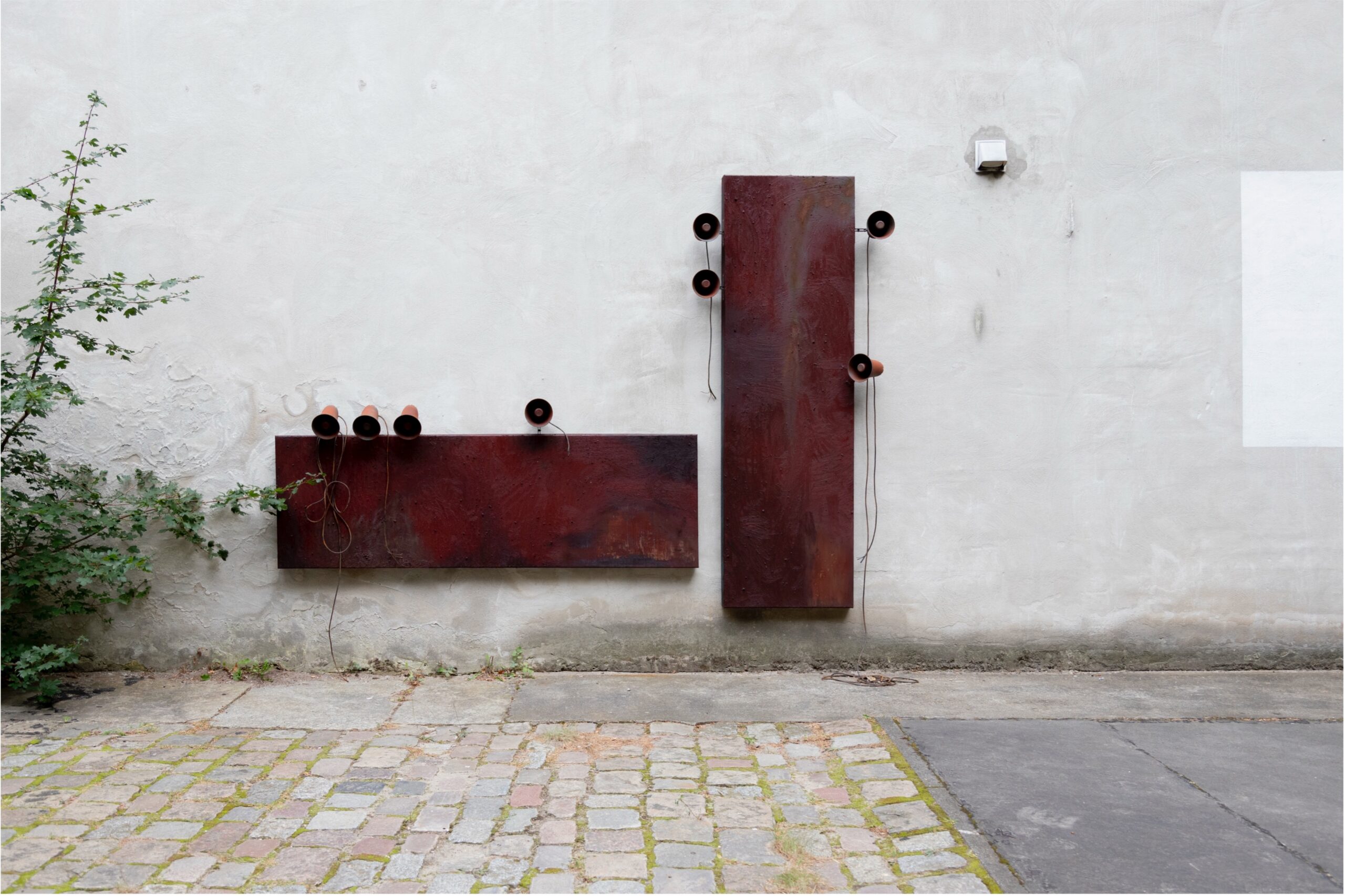
the low voice
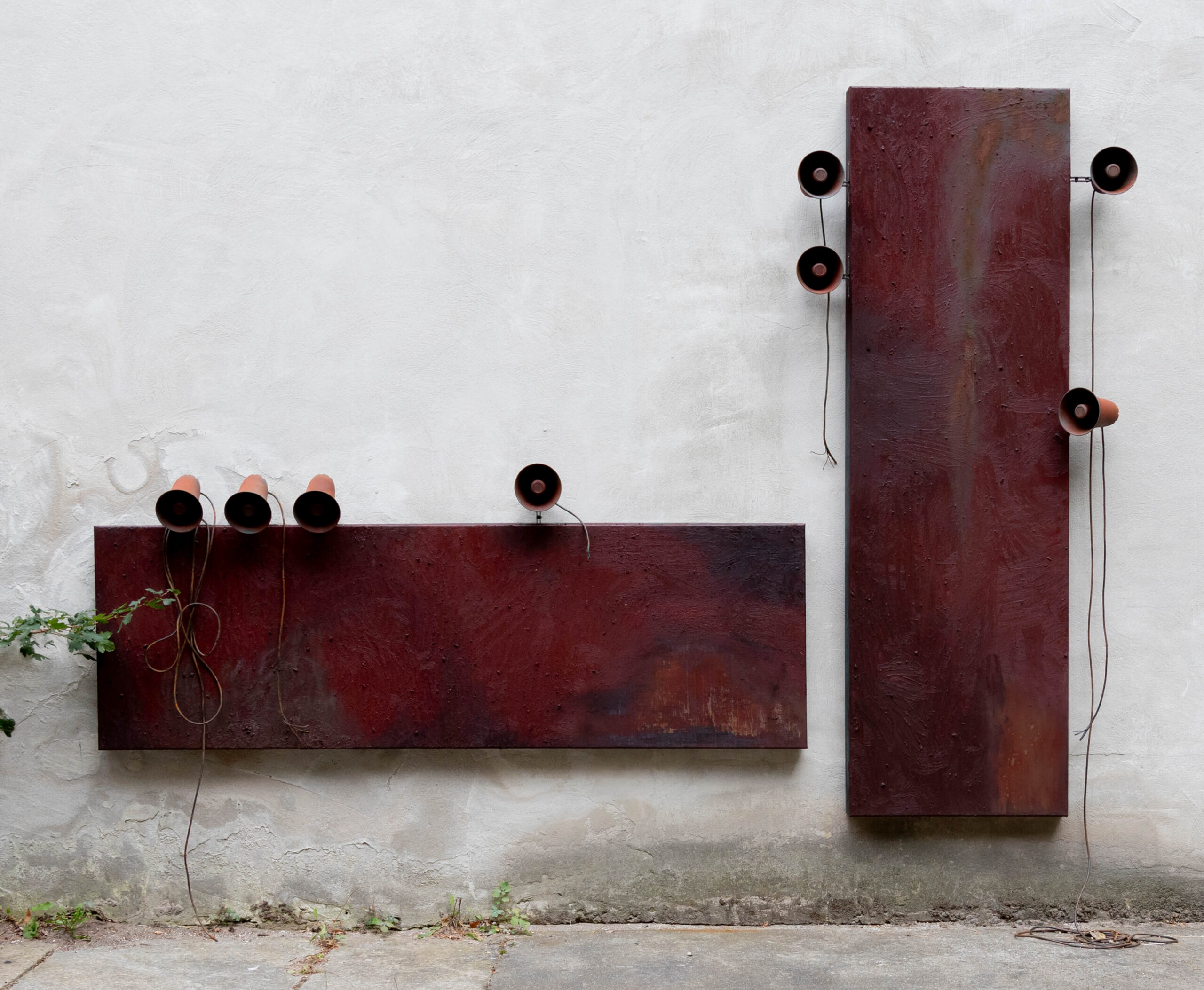
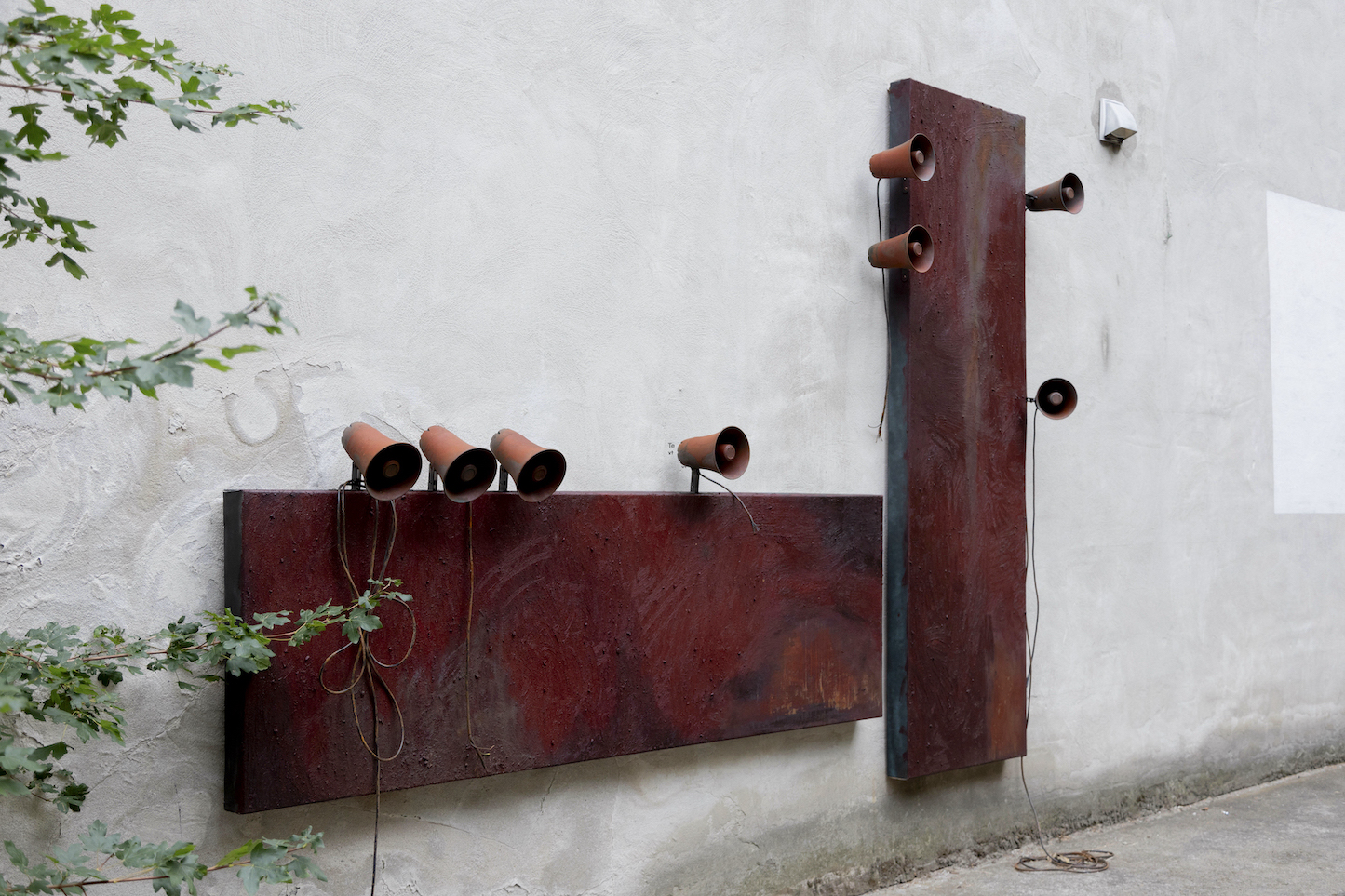
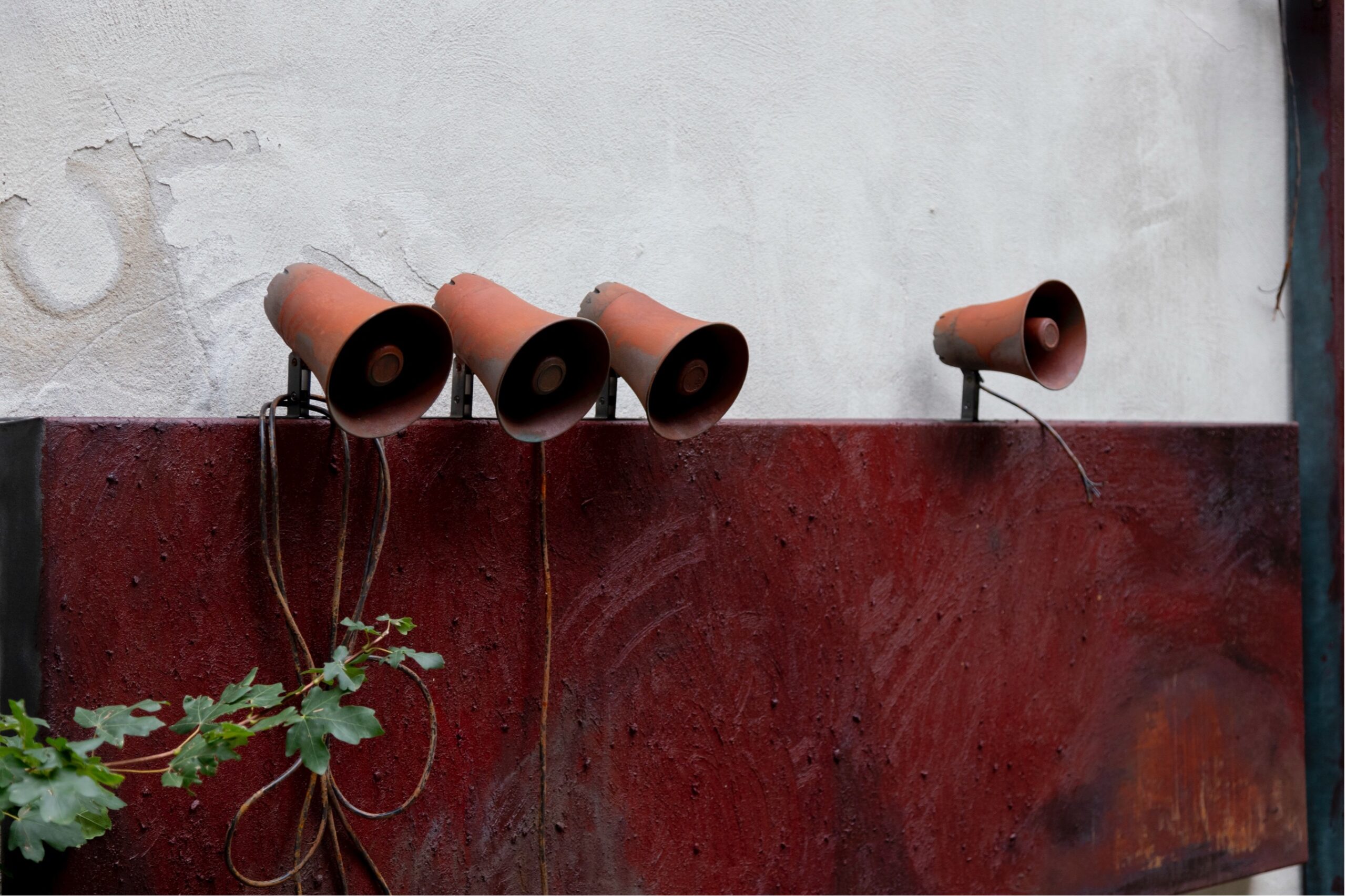
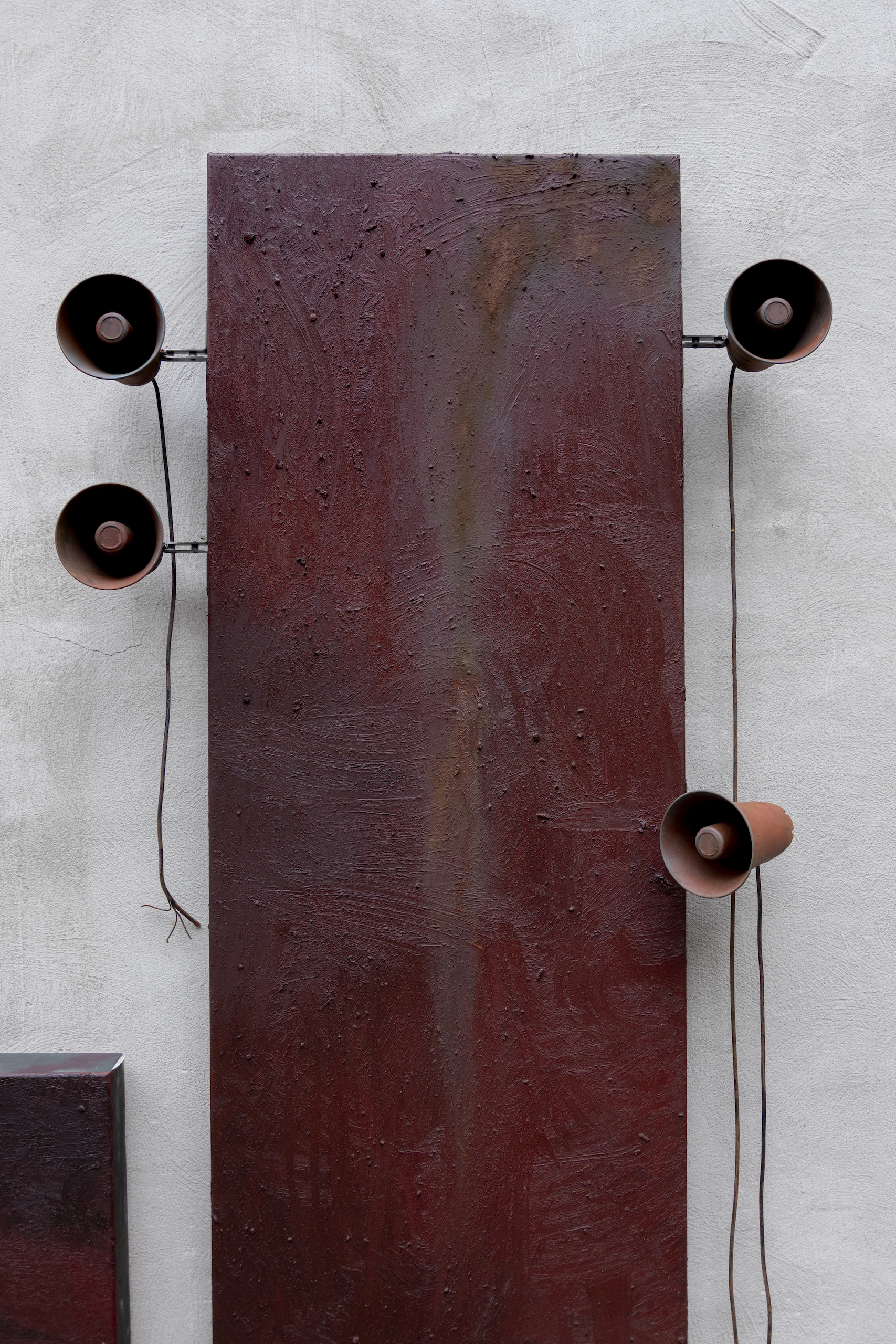
Since their introduction, loudspeakers have been an object of contention. Across the subcontinent and beyond they are used to emit calls to prayer and amplify sermons, and many temples and mosques are now equipped with loudspeakers. Demands are often made for Indian Muslims to emit the azzan or call to prayer in “a low voice” so as not to disrupt public life. the low voice draws together questions of erasure and political speech, as well as the relationship of sound to space and propinquity, by linking the Muslim and the Dalit subject. Voice has traditionally been associated with the rational human – the one who is capable of speech – as well as political presence and power. Conversely, the idea of the “low”, hushed, or unobtrusive voice is often linked to the subordinate and the subhuman; the one who is incapable of speech and articulation. These two works – composed of oil paint, cow dung, and iron powder, and affixed with loudspeakers – connect the ongoing erasure of the Muslim past and present in India, and the sustained violence faced by Dalits and lower castes, through the idea of the inaudible. The works reflect on what kind of presence might exist in the absence of audible sound.